The
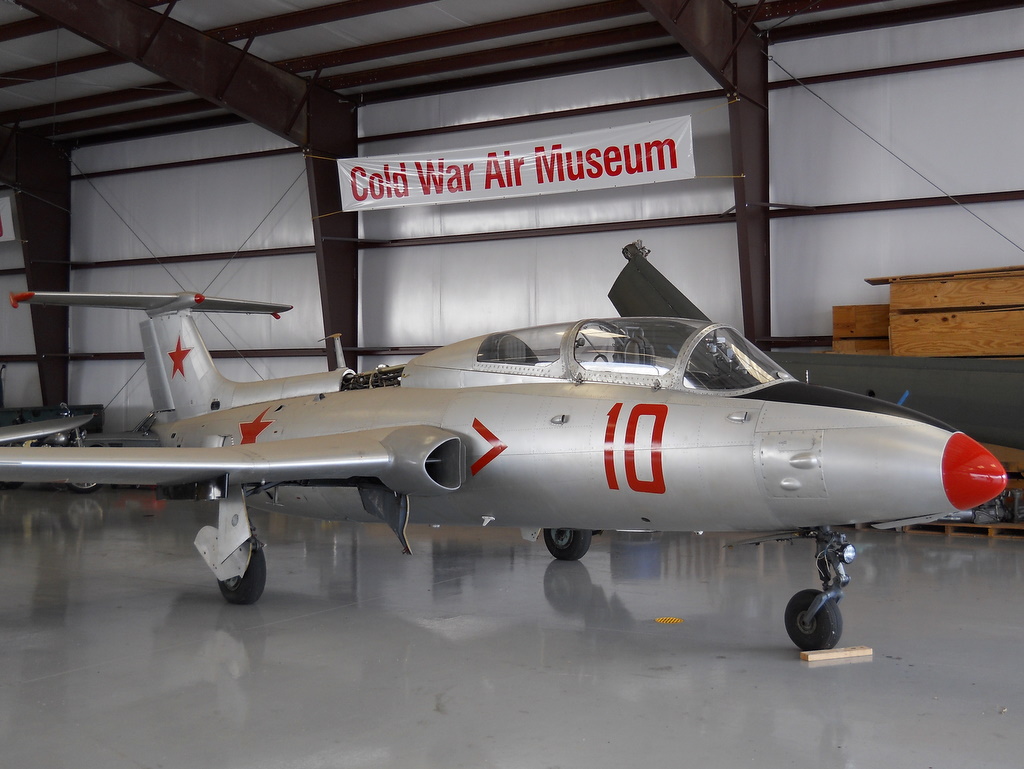
Cold War Air Museum is fortunate to have a number of friends and associates that help support the museum. Part of this growing network includes a number of L-29 pilots and aircraft owners.
Many of these fine
Delfin Trainers were imported, but some were never reassembled or flown. Even with the best of intentions, there sometimes is simply not enough time in the day to do everything a busy person wants to do. With the price of Jet fuel high and the economy low, several such projects have been offered or donated to the Museum.
Moving and storage alone places significant demands on Museum resources. Brad, who has taken a lead role in a number of projects lately, is shown rigging an L-29 center section for local transport. The cradles and frames shown in these pictures were originally used for the overseas shipment of the aircraft. Chris (with an appropriate western hat), stands by to help.
This particular nose section came from a base that also provided training and support for MiG-23's, as indicated by its nose art.
For many of the volunteers, this was their first opportunity to see an aircraft in pieces, as it was originally shipped. For others, it was a familiar experience, having moved dozens of similar projects in the past.
Machinery helps, but is not always available or necessary. Here, a set of L-29 wings is being moved by hand. Approaching a downhill section on the ramp, Homer stretches his legs to stay ahead of the rollers. Tales from Eastern block crews that worked on these aircraft contain numerous anecdotes about maintenance in countries and on bases, where equipment we take for granted was not always available.
Rene, Larry and others assisted as well. Equipping this golf cart with drop tanks did not significantly increase it's range. We're working on providing training for that as an L-29, mod-golf-cart (dash-1), issue.
With recent improvements in housekeeping, we were able to accommodate storage for three more projects (in pieces). Our goal (one on a list of many goals), will be to continue to restore and fly such aircraft in support of the educational and historical mission of the Museum.
Post WWII, there were tens of thousands of surplus aircraft on airports and in hangars across the U.S. Now, there are only a few hundred left in flying condition. The "mature" generation at the Museum watched as those aircraft and their history disappeared forever. Thus we appreciate the value of rescuing and recovering aircraft from "our" era for future generations to enjoy.
Bord 10, the aircraft hidden in the picture above, now hopefully heads for a new home.
Cosmetically restored at its prior home, we hope more importantly that this aircraft can again regain flight with the Museum's parts and maintenance resources for support.