Showing posts with label Mi-2. Show all posts

Sunday, June 29, 2014

MI-2, Bord 214 update 6/27/14


With the transmission back in place, the turbine engines have been reinstalled.  As with the transmission, the bright colors on the engine components help give the bird a "like new" appearance as it goes back together. But the colors are only a small expression of the work and attention to detail given to the process.


It seems like all aircraft (especially helicopters) are required to have one or more tight spaces where something has to be checked or connected.  Even with access panels removed long and skinny arms and fingers are often desirable and sometimes required. With the intake preheat not yet installed on the right engine, a moment of such "tight squeeze concentration" was captured above.


This front view shows one of the specialized pieces of standard field equipment, a ladder-bridge, used to access the front of the engine compartment over the nose of the aircraft.

The four forward facing air intakes are prominent in this view.  The center square opening (where a head is inserted above) is covered by a grilled panel after work is completed. Left and right of the square opening are the turbine intakes and the large round opening on top feeds the radiator assemblies in the transmission compartment.


As the exterior was restored, so were the markings and insignia. The red alignment indicators for the dzus fasteners allow visual confirmation during preflight that the compartments are closed and locked.


This Red Star-Roundel combination (appropriate for the period prior the breakup), was run through a computer program in order to match it to the curved surfaces underneath.

Monday, June 23, 2014

MI-2, #214 Status Update


After the start of a dark  and dreary rainy day (somewhat of a rarity here in sunny Texas),  the rain stopped and the sun came out so we were able to open the hanger doors and remount the transmission on #214 (shown here with #213 in the background).


The fuselage of 214 has been completely stripped and repainted. After years and years of service this transmission compartment has not been this clean and shiny since it was at the factory (and maybe not even then).


After an emergency call to get the venerable forklift into operation (a vertical lift beast of its own kind),  the transmission was rigged for placement under the watchful eye of museum directors and volunteers.


Of course like all good things helicopter, the transmission could not simply be "dropped" into place. After achieving near perfect vertical and angular alignment, the twin turbine drive shafts must be guided through tight bulkheads into the turbine compartments while at the same time the control rods, cables and connections are guarded or guided into position. With a generous application of attention and a few words of persuasion, the transmission was soon in place.


As the sun sets over the Texas prairie a transmission once again sits atop #214. The persnickety drive shaft for the left turbine is visible through the bulkhead in this photo illustrating the place, mate and "slide" 3D puzzle referenced in the photos above.

As #214 progresses back into service, we hope to provide a new series of restoration posts as before.


Wednesday, June 22, 2011

Third Mi-2 Gets Airworthiness

Returning to flying status after quite a few years on the ground, the Cold War Air Museum's third Mil Mi-2 "Hoplite" aircraft, bord 212, received it's airworthiness certificate today.

Directors Pete Coz and Jon Boede hold the latest FAA Airworthiness Certificate in front of the newest fully restored aircraft at the Museum.

Having multiple Mi-2s and pilots to fly them, allows the museum to respond to more requests for aircraft at airshows and events throughout the year.

Congratulations to all our volunteers and associates for their efforts in making this project another success at the Cold War Air Museum.

Saturday, June 11, 2011

During the last FAA visit to the Cold War Air Museum, we picked up several action items for the completion of our Mi-2, bord 212.

One of them was adding dataplates (labels) to the panel and matching everything together in the new Pilot Operating Handbook (POH).


Jon, the detail oriented member of the group, studied the panels and requirements to send the necessary dimensions and details to the engraver.

The report for this week is; the POH update is nearly complete and the dataplates are on their way back from the engravers.

We're almost there!

Saturday, May 7, 2011

Mi-2 attends a Gala Event

The Cold War Air Museum Mi-2 and crew were recently invited to attend the 30th anniversary event at The Studios at Las Colinas.

We are fortunate to be in an area with so many talents and benefits.

Mike clears the area below for the Mi-2's arrival. The crew also kept a sharp eye on the weather. Dumping rain and hail to the South, the weather cooperated for this flight by providing VFR conditions with a dramatic backdrop of low clouds.

We received the Red Carpet treatment and many visitors, actors and executives had an opportunity to see the MI-2 and visit with Cold War Air Museum Associates at the Las Colinas Studios.

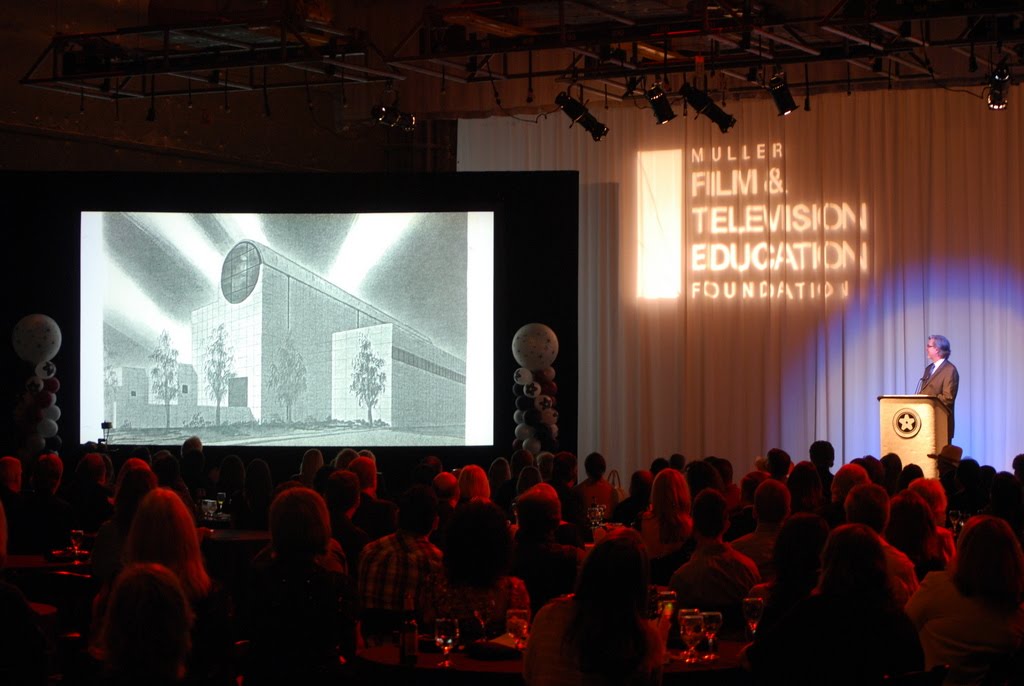
The "Gala" was a celebration and review of thirty years of television and movie production complemented by recent change and renovation by the Muller Group.

Larry Hagman, Patrick Duffy, and Linda Grey from the TV show Dallas
were there and Cold War Air Museum Associates got an opportunity to briefly meet them and answer a few questions about the Mi-2 and the Museum.

The show must have been translated and watched in Eastern Europe as people would ask us about "JR" in our early travels there.

And Mike got to sit on the bench that played a supporting role in Forrest Gump while he watched hand rolled cigars being made. Life is even better with a box of chocolates and a good cigar.

With thanks to Mike, Johnny, Brad and Larry for crewing the event as well as Chris Williams for introducing us and sharing these pictures. More great shots from Chris and Bobbi can be found at the www.artsciencephotos.com web site.

Wednesday, April 27, 2011

Cold War Air Museum - Labels

Projects at the Cold War Air Museum often involve a number of people and many details.

Placing N numbers and labels on an aircraft is one of the many details necessary to complete each project.

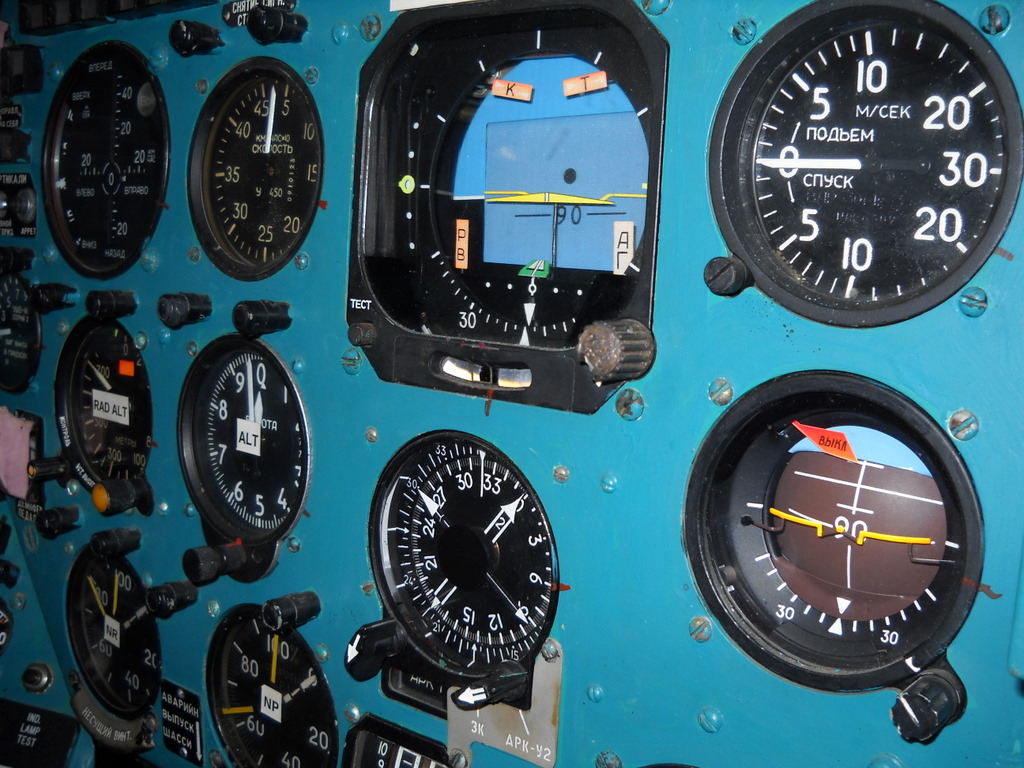
Changing critical labeling in the aircraft to English makes the aircraft safer and more convenient to operate. Many of the English label sets were still available from the original Polish factory. Others had to be made.

With some of the original non-critical labeling still in place, there is an interesting mix that adds to the feel and authenticity of the aircraft.

The aircraft lighting system is equipped with both red and white lights for variable lighting conditions and night ops.

Rheostat adjustments allow lighting levels to be increased or decreased. The overall effect at night is dramatic and suitable for fine low budget movie special effects.

Wednesday, March 2, 2011

Mi24 Bord 120, moving toward flight status

We never seem to be at a loss for projects around the Cold War Air Museum. Among other aircraft receiving attention last weekend was Mi-24 Bord 120. The second, soon to be flying, large Russian (former Bulgarian actually) helicopter based in Texas was scheduled to receive a new set of main rotor blades.

This project started with the new blades on the ground and the volunteers full of enthusiasm. The unique experience that these volunteers get working with associates on their aircraft attracts such aircraft enthusiasts.

The blades have to be hoisted about 5 meters up and aligned to the main rotor hub before they can be attached.

Don't let the look of scepticism fool you, Larry's seen this done before. I think he's just mugging for the camera. We are looking forward to doing articles on each of these associates new aircraft soon.

With a "Yo heave ho", a blade is brought over to the scissor lift that will be used to simplify and expedite the process. Improvising is no stranger to this crew.

Placed on padded saddles, each blade will be carefully raised and moved up to the hub for mating.

On approach, the crew holds her steady.

On short final, they are at the proper height and in the groove.

With minor adjustment, each blade slides easily into place. 


Hey Bruce, I've got cyclic and collective here, a blade on top and we're going up and down and back and forth. We are logging this as flight time aren't we?

Between helping and watching (with amusement), Johnny takes care of routine maintenance on Mi-2 Bord 211, cleaning the transmission filter. Johnny's motto of "Get 'er done, let's get 'em flying" is well applied here.

Monday, May 3, 2010

Spring Cleaning

As we prepare to take some of the aircraft associated with the Cold War Air Museum to local air shows, we are once again thankful for the support given to the museum by our volunteers.


The Mi-2, which is preparing to go to Corsicanna this weekend for their annual fly-in, is shown getting a well deserved bath. Someone passing by said "Hey, I didn't realize there were white numbers under there".

Thanks guys, we appreciate your work.

Sunday, March 28, 2010

MiGs and Mils, Cockpit Color

A topic of discussion for visitors at the Cold War Air Museum has been; "What color is that?" Or; "Why did the Soviets paint their cockpits green?"
Model making web sites have frequent questions and discussions about getting the exact color of soviet aircraft cockpits, exactly right.

Fortunately, we have the advantage of having the "real thing" with which to compare. We have been told that the color chosen by Soviet designers helps to reduce stress and maintain a pilot's effectiveness on long missions. While the Soviets were not the only country (or manufacturer) to use this color, they have used it for so long and in such great numbers that it has become a trademark of Sov-block aircraft.

Because not all aircraft are painted at the same time, or at the same place, there is some inevitable variation in color. Some aircraft have more of a green tone.

And, some have more of a blue tone, even when the aircraft come out of the same factory in the same country. In general though, the description "blue-green" seems to fit slightly more of the aircraft we see (especially the newer ones), than the alternate description often given as "light green".

These three panels, or sections of panels from different aircraft, show some color variation even though all three came from the same factory.

We don't worry too much about making an exact color match to some mythical factory standard, but we do make a color match for individual aircraft when necessary during restoration. Besides, we are mostly guys, and most of us simply made it through kindergarten with the 8-count box of crayolas, not the 64 count box (I don't even know how they come up with the names for so many colors). While the paint store most closely matched the blue-green above with a commercial color named "Mermaid Green", it's just not right to say "Our fighter cockpits are decorated in Mermaid Green". So for now, we'll just stick with something that fits within our limited repertoire and continue to refer to all of these colors as simply blue-green, or more simply as just that "Russian Cockpit Color".

Sunday, March 14, 2010

Mil Mi-2 Restoration Work Continues

Among the many projects at the Cold War Air Museum is the restoration of our Mi-2, Bord 212. When completed, we will be applying for airworthiness certificates for both 212 and 213 to join 211 on flying status.

As previously reported during the restoration of Bord 211, we have had to deal with some corrosion in these aircraft. For previous details, click on the labels at the botttom of this article to follow the various story threads.

After the fuel bladder was removed, cutting the old metal away exposed the fuel compartment. Areas within the compartment were inspected and treated as necessary.

The old skin was used as a template for all rivet and access panel hole locations to be traced onto a new piece of aircraft aluminum.

Charles then carefully cut and trimmed the new piece for a perfect match.

After the external strengthening pieces ("Hats") were riveted in place, the rivet tails on the inside were covered with Polykin tape to protect the fuel bladder.

Both the inside and outside were treated and coated before the hats and doublers, seen here in contrasting color, were reattached.

We expect the next step, "shooting" (riveting) the skin back on, will take place soon.

Thursday, February 4, 2010

More Miguel's MiG Models

Miguel, photographer and museum associate, has used the aircraft at the Cold War Air Museum as a backdrop for his work before. Our cold war era aircraft, equipment and uniforms help accent his work.

This Saturday he photographed Sarah, a professional model from the DFW area who was excited to augment her portfolio with something more unusual.


The weather was freezing, the wind was blowing, but Sarah was a real trooper. Here she is posing with one of the museum's L-39s in a cold war era uniform.


Always the professional, it's hard to tell from this photograph that she was mere moments away from becoming an ice sculpture.

Inside, Sean and Rene were able to locate some heaters and Miguel got these terrific shots with the Mi-2 helicopter and MiG-23 supersonic interceptor.


As the MiG is undergoing restoration it was possible to put Sarah in the front seat of the Sparka and let her light up the caution and warning panel without fear of her setting off the pyrotechnic charges that would normally be part of the ejection seat. The result was this very unusual photo of Sarah and the "christMiG tree" lights.


Our thanks once again to Miguel for letting us use some of his photos on the blog. A larger collection of photos can be found on his Flickr page.