Showing posts with label Bord 38. Show all posts

Tuesday, May 24, 2011

MiG-21 Work Continues

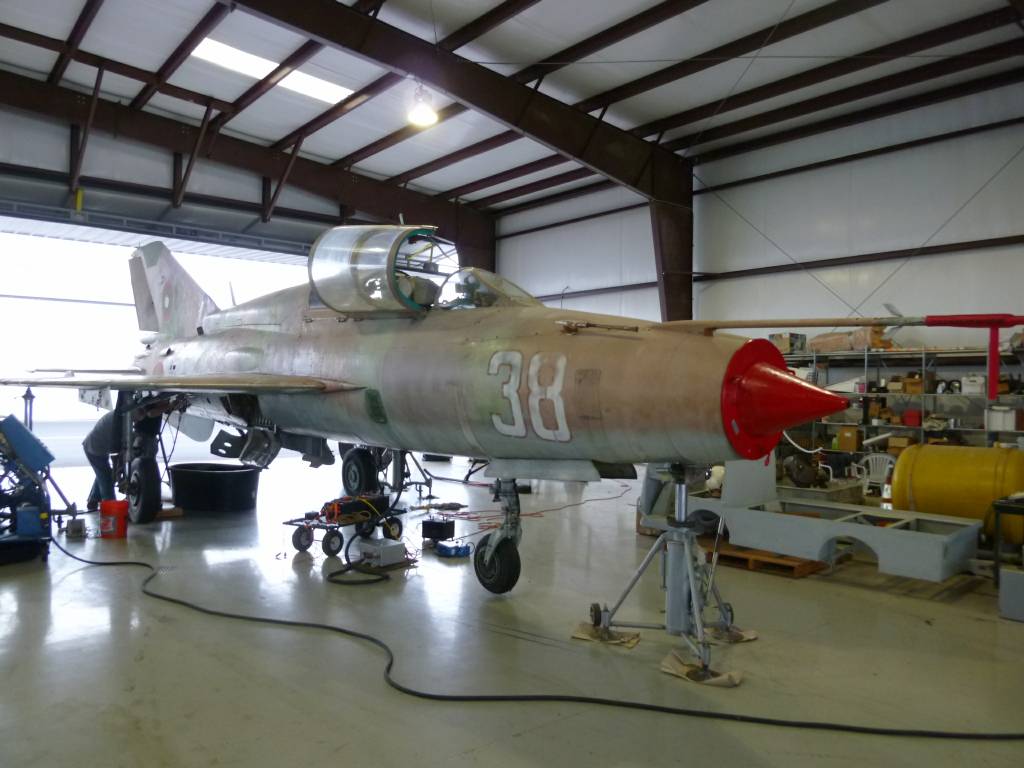
MiG consultants for the Cold War Air Museum  are in town working on our MiG-21UM and MiG-23UB.

On jacks, Bord 38 is about to go through gear retraction and extension cycles. Our external "mule" allows the hydraulic system to be isolated and checked before we move on to testing the engine. Ground tests are an important milestone in the restoration and certification process.


Improvisation is sometimes necessary. A few litres of hydraulic fluid needed to be injected into a hydraulic reservoir through this service port, so we modified a bug sprayer from the local hardware store to do the job. Kazik shows us how it's done.


Meanwhile, Roman inspects the connections and cannon plugs under the MiG-21's wheel well.


Our goal for this month is to get the hydraulic systems on the MiG-21 tested and the engine started so the aircraft can be taxied under its own power.

Monday, November 2, 2009

MiG-21 Nutplates

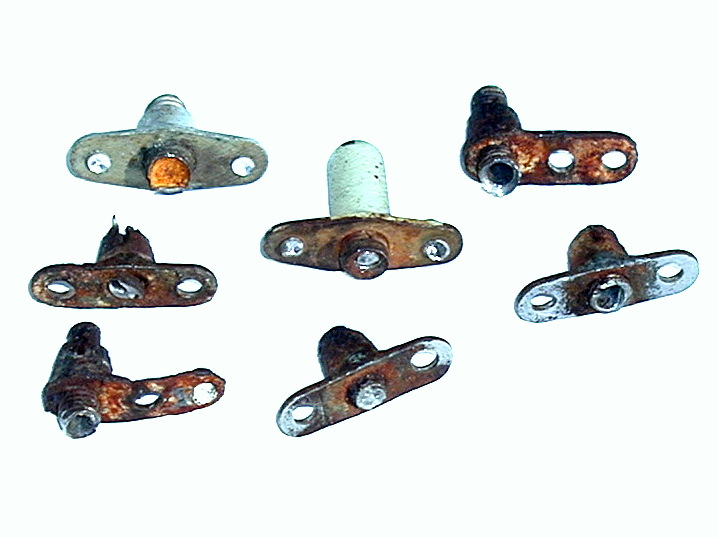
Help is needed to locate a source for nutplates for the MiGs!

In an earlier post we talked about the harsh conditions these aircraft lived under and how we had to drill out many of the skin fasteners that had rusted in place.

These fasteners may be called nut plates in the U.S. or anchor nuts overseas, but whatever you call them, the sizes we encounter in the MiGs and Mils do not match current U.S. or European rivet hole spacing. We have tried several different sources with no luck. All say "sure, is no problem" and then send us something they think we want. Our problem is we need "what was", not "what is". We finally talked to a mechanic who told us "Yes, he was sure there was a warehouse full of thousands of what we needed somewhere". But, someone would have to just go around looking until they found what we were looking for.

We were fortunate to find 25 pieces called out as AM5GB630 that were a perfect replacement for the 5mm double lug parts we need. We and our supplier thought that he could get more, but alas that was not to be. It turns out that he had bought a thousand "from a Russian warehouse" several years ago and these were the last 25 of those thousand. When he called back, he found there were no more to be had and now he has an aircraft of his own waiting on these very same parts to be repaired. When we find some, he needs some back!

Here's a challenge for all our Cold War Air Museum readers. Below are pictures and drawings of the parts we. need. Most importantly, we need the 5mm single and double lug non-capped fasteners. If someone knows where fasteners of this vintage can be found we would be very, very grateful. In the same series, we have a lesser need for other sizes as well.

You can contact us by using the comment link below or email us through the contact page on the main museum site. Thank you!


5mm Single Lug, above


5mm Double Lug, above


This is your mission, should you choose to accept it. This Blog will self-erase upon completion of this mission. Cue Theme music here - dum dum, da da, dum dum, de de ... etc.

;-)

Thursday, September 10, 2009

Mig-21 - wheel and brakes

The Cold War Air Museum, Mig21 wheels and brakes are massive, as you might expect.

The size of the wheel allows a larger brake assembly to be housed inside, provides more area for heat dissapation from the brakes and allows for a larger dianeter tire to provide more tread area to absorb high landing wear. The Mig lands at about 200 mph (330 kph) and a set of tires may typically last for only ten landings.

In earlier and smaller aircraft,drum brakes were used. Disk brakes were developed when military and commercial aircraft got larger and faster and needed more efficient breaks to stop on reasonable length runways. This brake stack has four rotor plates that rotate with the wheel and five stator plates that remain stationary with the wheel hub.

The tabs on the rotor plates must be lined up and slid into the grooves on the inside of the wheel rim shown above. That is what causes them to rotate with the wheel between the stationary plates. When pressure is applied to the stators, the moving and stationary plates are squeezed together eventually bringing the wheel to a stop. All of the excess energy from the speed of the aircraft is turned into heat. Brakes get very hot after a landing and must be allowed to cool before another landing cycle.

Tuesday, September 1, 2009

A Mig-21's Tail

After attaching the tail, the Cold War Air Museum, Mig21 is ready for static display this weekend during the Sept. 5th airport open house.
This practice run started with the tailpipe assembly. The work process gives us some useful insight into the aircraft systems and helps us determine what parts are left to be ordered or replaced before final assembly.

Slipping the tail out of the shipping cradle and rigging the lift frame (in the absence of a genuine factory tail cradle) gives the crew some practical experience. Different procedures will be used in final assembly to accommodate the many hookups necessary and allow the tailpipe to mate with its slip mounts.

Like many military aircraft, the tail is attached with a ring of bolts that allows it to be easily removed for maintenance and inspection.

For now, we simply need to insure that there are no connections or assemblies caught in the way. On final assembly, there are a myriad of mechanical, electrical, hydraulic and fuel connections that will have to be made while mating the wings and tail. Each one seems to demand incredibly small hands, fingers and tools working in impossibly tight spaces.

The horizontal stabs slide over rotating shafts so that the entire surface is moved under hydraulic control. Our new hangar neighbor Pete came over to see what was going on and stayed to help attach the stabs and flaps. We really appreciated his help. This kind of help is an example of the great airport community we are lucky enough to be part of at Lancaster.

With the tail on, the wings look even smaller than before.

All hands help on the job.

Wednesday, August 26, 2009

Mig-21 Gear Down

We are moving towards having the Cold War Air Museum, Mig21 on static display during the Sept. 5th airport open house.

After attaching the wings, and raising the aircraft, we could work on getting it on the gear.

Jon almost fits under the wing as he checks the tires against the gear. The wheel bearings were removed, cleaned and lubricated before the wheels and tires were mounted.

The tires shipped with Bord 38 show a great deal of wear and will be replaced before the aircraft reaches flight status.


Main gear down, the team is ready to extend the nose gear. Jon studies the cockpit to locate the emergency gear extension pull handle. It is important to identify which Red Handle to pull!

The aircraft stands very high off the ground. This gives clearance both for the large tires used for the main gear and raises the intakes higher above the taxiways and runways to help avoid intake of snow, water and FOD on the bases where these aircraft were originally located.

With the completion of another busy day, the work crew paused for smiles and a picture. The wings will come off at least once more for additional work and a myriad of hydraulic connections remain to be checked and connected before final assembly.

Monday, August 24, 2009

Mig-21 Wings On

Visitors want to see our Cold War Air Museum, Mig21 on display.


With the Annual Lancaster Airport event, Warbirds on Parade, coming Saturday, September 5th, we are taking a break from the restoration work to display the aircraft during the event. Attaching the wings and putting it on the gear temporarily gives us a chance to check some of the work we are doing before returning to the job of preparing it for flight status.


Attaching the wings lets us evaluate some of the work we have done and some of the issues we are facing. With the wings attached we can lift the aircraft from the shipping cradle, giving us a chance to drop the gear and look at other areas on the aircraft.

Pulling the shipping cradle out is an event. Because of scheduling issues, the 21 has been in storage longer than any other aircraft in the museum inventory. This is a landmark event for the restoration calendar.


With the aircraft now up on jacks, we can work on getting it on its gear, allowing us to move the aircraft and put it on static display for now.

Thursday, August 20, 2009

Mig21, Winging it

Recently we had fun with Jon while showing you some of excellent work by one of our associates recreating a complex piece for the Mig21 leading edge at the Cold War Air Museum. This replacement was driven by our concern for finding and treating corrosion in these older aircraft.

Unfortunately, we occasionally find a problem and then have to deal with it. This particular spot was peaking out at us in an earlier post and when we spotted its sign, we opened up the leading edge of the wing to thoroughly inspect the area. The surface corrosion has been removed in the picture above, so we can see the effect on the remaining metal. This spot is in a short section that joins the leading edge spar of the right wing to the fuselage. While the majority of the metal remains, once the metal structure is corrupted its failure strength becomes an unknown. The safest thing to do is to replace it and that is what our airframe adviser recommended.


Fortunately,part of our critical support system includes access to an excellent aircraft repairman.

Charles is shown here drilling out rivets so the damaged piece can be removed.


The offending piece is shown above, on top of the wing section from which it was removed. Below, it is shown with the replacement piece made by Richard,


After test fitting with the wing mated to its attach points, the piece was given a surface treatment and rivited in place.

After a final coat of paint for additional surface protection, all fittings will be reattached and the wiring harness that ran through the part will be reattached.

Sunday, July 5, 2009

MigMan

We have fun whenever we can at the Cold War Air Museum and fortunately most of us maintain a sense of humor, most of the time.

Phil completed a project this weekend to attach the Mig21 wing so that Charles can finish fabricating the replacement short spar in the right wing leading edge.

Jon arrived just in time to help with setting the wing attach pins in place and to demonstrate a Victory Dance on top of the wing (we like airplanes we can walk on - or dance on, none of this wimpy Cessna stuff, thank you).

We had a delay from our earlier work bringing the Mig-21 together when we discovered some damage on one of the pieces of the wing. Our airframe consultant recommended replacing the piece and fortunately one of our volunteers was capable of fabricating a replacement.

The replacement piece is shown with the damaged piece above. The person fabricating this piece has made many "one of a kind" pieces for special U.S. aircraft and he was surprised at the techniques and technology embodied in the part (bearing in mind our belief about what we thought their capabilities were at the time).

The temporary attachment allows the replacement piece to be positioned so that rivet holes joining it to the wing skin and leading edge spar can be drilled in place, ensuring that the new piece perfectly replaces the old. After these holes are drilled, the replacement piece will be removed and a surface treatment applied before final attachment.

The wing will be removed and re-attached at least once more before final attachment. The lessons learned in each experience are incorporated as we go along.

Here, the wing dance floor and the wing attach bolts are shown prepped and ready for Jon's arrival.

Thursday, April 23, 2009

Base Jumping

Museum aircraft selection involved visits to a number of different bases.

In many cases, we were able to pre-screen aircraft that we wanted to see. But old fashioned "Mark-1" eyeballs were used to make the final decisions.

Seeing the array of hardware that was ready to go to war provokes strong feelings and memories for the generations that grew up in the era. We hope a sense of history and understanding passes to the generations that follow.

Because aircraft of different types (and sometimes aircraft of the same type) were stored at different bases, the group had to go from base to base around the country. Because travel time took away from inspection time, the trips between bases were often made in a hurry. Texans, used to large SUV's on super-highways found themselves crammed into smaller vehicles on smaller roads. While perhaps luxurious by local standards, the travel accommodations had them asking "are we there yet?".

The array of hardware was impressive. On the first visit, a base commander was reluctant to agree to the release of even a single aircraft. By the last visit, positions and responsibilities had changed and any and all were available (at a price).

Bord 122, in a field with sister ships was our first choice. Unfortunately, this was the unit that was damaged upon arrival.

The tallest member of the group, in the foreground, suffered patiently, folding himself back into the car as the group jumped from base to base.

And they drove,

and drove,

sometimes passing sights that were intriguing, wishing there was more time to stop and visit. The countryside was beautiful and the people were polite and curious about the visitors that were interested in their country and their aircraft.

On some bases, aircraft were still in bomb-proof revetments, poised as if they were still on the ready line.

The museum's Mig-21, Bord 38 is shown here as first seen during one of the base visits.